

How to Use Afrophoria in Black Storytelling
AFROPHORIA WRITER’S ROOM FRAMEWORK - WORLD OF STORIES - 002


World of Stories is a deep-dive series that explores the architecture of storytelling across film, television, and emerging scripted universes. Through a producer’s lens, this series breaks down how worlds are built—layer by layer—from character ecosystems and setting to theme, tone, and narrative structure.
Each installment examines the intentional choices behind the stories we watch: Why this world exists, how it functions, and what makes it resonate. Whether grounded in reality or expanded into imaginative realms, World of Stories highlights the systems, cultures, and emotional truths that give a story its staying power.
This isn’t just about what happens on screen, but it’s about what holds it all together.
From analyzing established worlds to unpacking in-development concepts, World of Stories serves as both a study and a blueprint for creators looking to build narratives that feel lived-in, expansive, and unforgettable.
For creators. For builders. For those shaping what comes next.
In the previous essay, I spoke about what Afrophoria is and introduced you to a new way of world-building for Black storytellers. In this article I will be discussing the five different ways to use Afrophoria in Black storytelling. The elements are:
Brainstorming
Researching
Idea Development
Concept Producing
Story Development
For:
Black Storytellers (Creators, Writers, Artists, etc)
The stage of brainstorming is one of the most important elements of Black storytelling, and when you include Afrophoria, nothing is different. The stories we tell as Black creators come from a state of mind that many won’t be able to understand, and in order for us to understand it for ourselves, we must go through the stage of brainstorming. This is something I often talk about in this publication, so most of you might already know what I’m going to say. Based on your learning style, you can brainstorm properly, and for me, I am a visual learner who also experiences learning from a kinesthetic point of view, which means I spend most of my brainstorming time on Pinterest, Tumblr, and Canva while using things like magazines and physical media to help me. However, do what’s best for your learning style and start brainstorming.


Most people may think that the research process comes before the brainstorming, but for me, I like to brainstorm before I research. I need to know what exactly I’m researching and why I’m researching in order for that process to feel valid to me. Researching for any project is such an eye-opening moment, but also a beautiful experience. Once you have a sense of the type of story you want to tell using Afrophoria, then you can start researching the topics regarding your story.
After you have done your research, it’s time to start developing the idea. Idea development is another one of my favorite parts of bringing a story to life. As for Black storytellers, it is important for us to develop our ideas into something that is not only impactful but also creative enough to catch others' attention. Take the information of what you have already brainstormed and researched and use that to develop your idea.
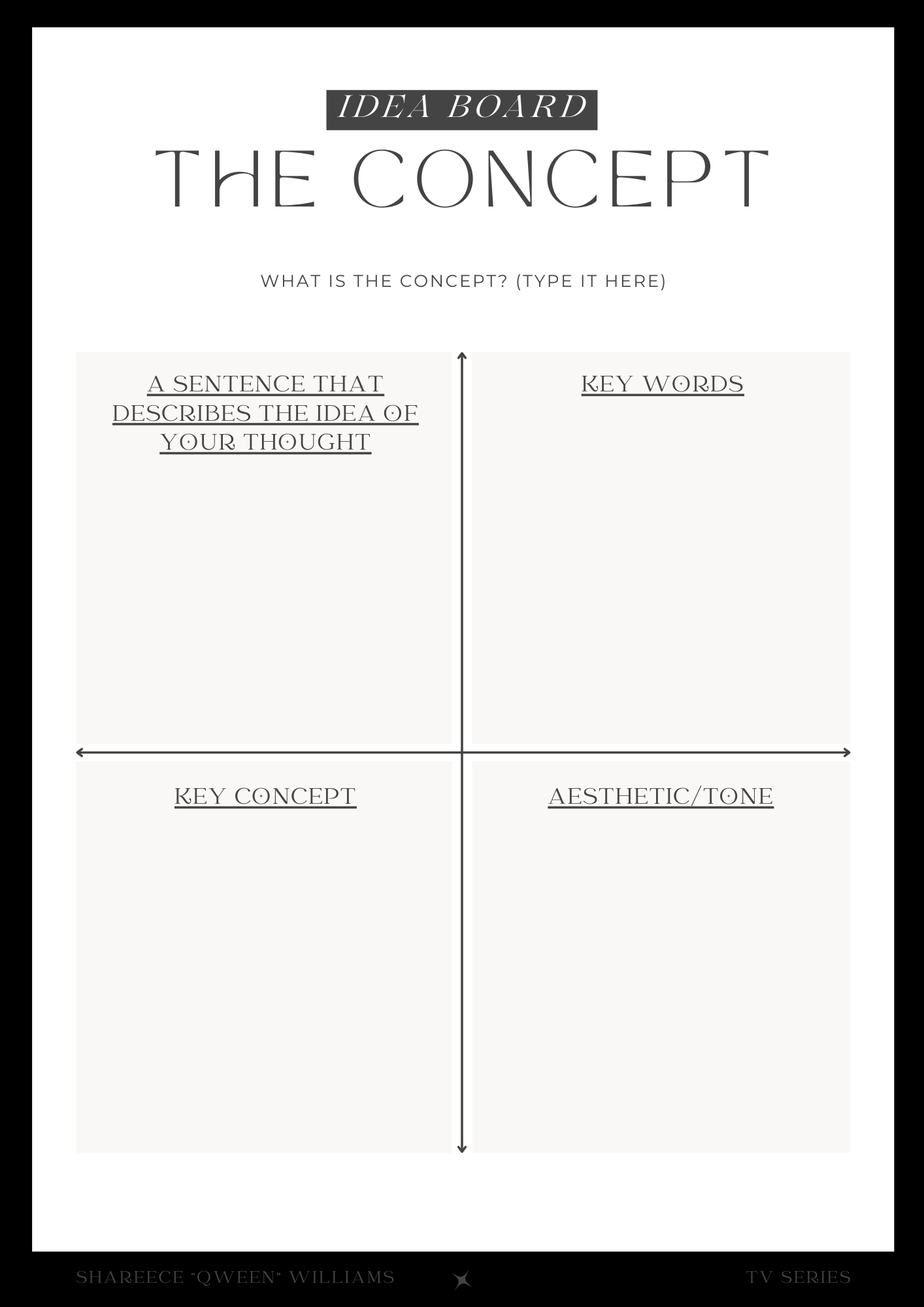
Now it’s time for concept producing (another one of my coined terms); this is where you’re making the decision of how you want to bring that story to life. Whether it’s through TV/film, novels, short stories, music, or anything of that nature, this is where you make that decision. Not every idea wants to become a show or novel series, so you have to sit with it and see where the idea takes you. This step may vary from person to person and could definitely be the last thing you do, but for me, I like to know before building out the story. You should ask yourself:
Is this a story that requires funding?
How do I want to distribute the story?
Who is my target audience?
Why does this story matter, and why should I tell the story?
And lastly, the best part of it all, story development. After doing all of those steps, the only thing left to do is to develop the story. We brainstormed, we researched, we developed the idea, and we concept produced, but now we are developing the story by listening to everything that came before this. And again, depending on your craft, this may look different, but overall, I believe there are a couple of must-dos when developing a story.
Concept Developing—building out the story visually (this step can be done during the concept-producing stage depending on if you’re pitching it)
Building the narrative from the vision—plan the story structure, identify characters, the setting, logline, synopsis, etc.
World-Building—creating a world no one has seen before, developing the setting, the rules, and how you see this world impacting society.
These steps alone are crucial for storytelling, but especially for world-building with Afrophoria.
Now that we got the basic part of storytelling out of the way, let’s get into some framework for the writers’ room (this can work for independent writing but also for collaborative projects):
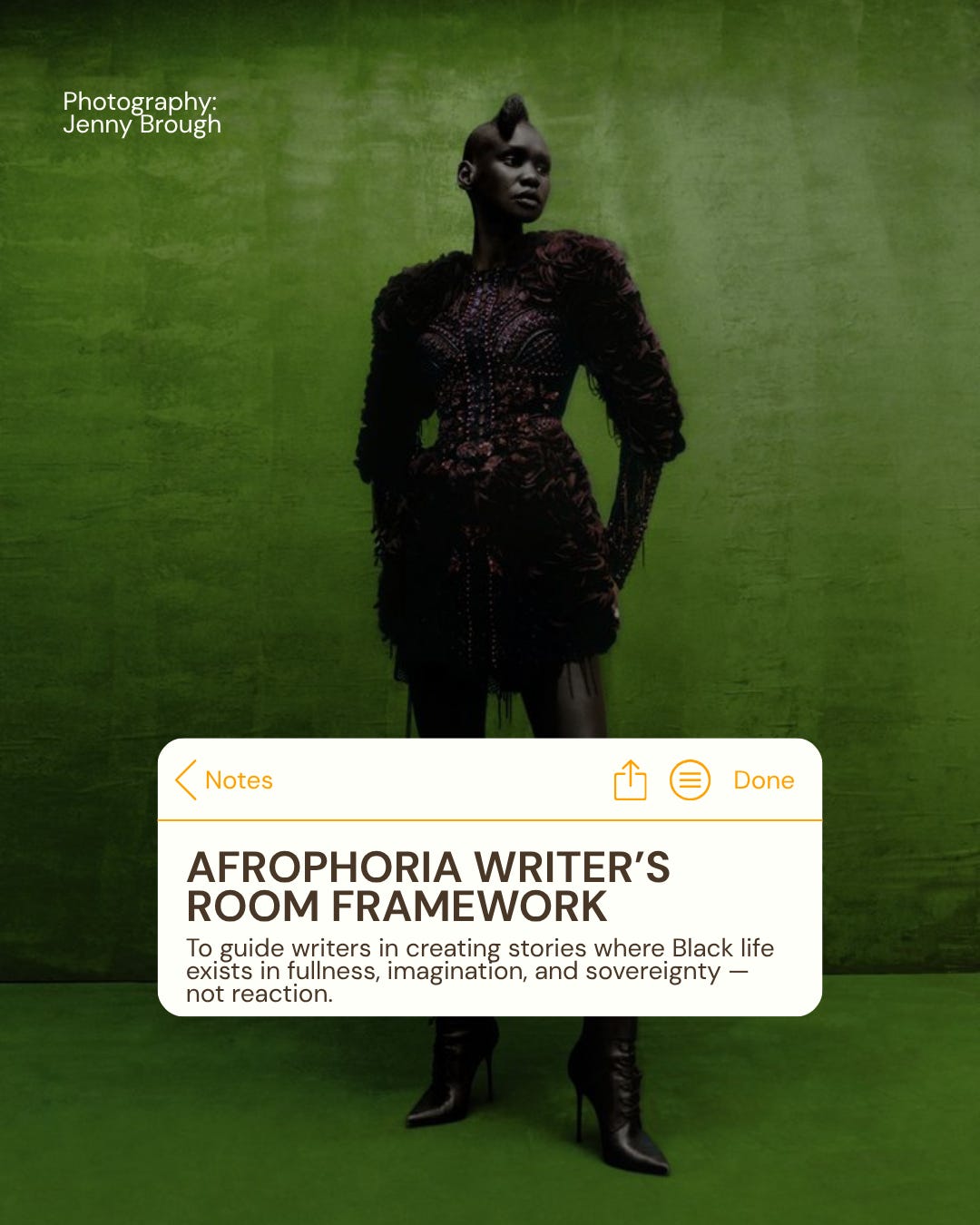
World-First Story Development Model
Purpose:
To guide writers in creating stories where Black life exists in fullness, imagination, and sovereignty — not reaction.
Afrophoria Writer’s Rooms are world-design spaces, not just script discussions.



Shareece’s Screens isn’t a hobby.
It’s a development room.
This publication operates as an open studio inside Realm Empire Network (REN) — where I build scripted and unscripted worlds, break down character psychology, publish development notes, and document the architecture behind universes like Project Universe and Vessel Century Universe.
I am a full-time creator.
That means:
I research.
I write.
I world-build.
I develop show bibles.
I design templates for storytellers.
I mentor through Script My Story.
I actively develop visual projects inside REN.
And I do it independently.
There’s no studio payroll behind this page.
No corporate marketing budget.
No network funding my development hours.
When you tip Shareece’s Screens, you are:
• Funding story development
• Supporting independent Black-led studio infrastructure
• Investing in world-building philosophy outside of Hollywood systems
• Allowing me to create without compromising the vision
• Helping sustain a full-time creative practice
This work takes time, discipline, and emotional labor. The breakdowns you read here — from character autopsies to power dynamics templates — are the same level of thinking I apply inside writers’ rooms and development spaces.
Tipping allows me to:
Dedicate more hours to story development
Produce deeper research essays
Release more templates and tools
Host more free educational breakdowns
Continue building REN as an ecosystem
If something here helped you think differently, build stronger characters, or see story in a new way — consider supporting the studio.
Even small tips matter.
Independent storytelling only survives when the audience values the architect as much as the art.
